
In the vast expanse of space, where silence reigns supreme, the ability to communicate is nothing short of miraculous. Imagine trying to have a conversation with your friend while floating in a vacuum—awkward, right? That’s why spacecraft communication is a game changer. It’s the lifeline that connects astronauts to mission control and allows them to relay vital information back to Earth, all while dodging space debris and the occasional rogue asteroid.
From radio waves to laser beams, the technology behind spacecraft communication is as fascinating as it is essential. It’s not just about sending a tweet from Mars; it’s about ensuring human safety and mission success in the great unknown. Buckle up as we explore the intricate systems that keep our cosmic conversations alive and discover how they make interstellar chatter possible, even when the universe seems to be giving them the silent treatment.
Overview of Spacecraft Communication
Spacecraft communication functions as the backbone of any space mission. It facilitates critical exchanges of data between astronauts and mission control. Efficient communication systems transmit telemetry, voice, and video signals across vast distances.
Different technologies provide various communication methods. Radio waves remain the primary medium due to their ability to traverse the vacuum of space. Communication satellites often relay signals, ensuring constant connectivity, even during deep-space missions.
Signal processing plays a crucial role in maintaining clarity. Data compression techniques enhance bandwidth usage, making it possible to send more information quickly. Advanced error-correcting codes help diminish signal degradation caused by interference and distance.
Solutions for communication challenges include multiple frequencies. Utilizing both high and low-frequency bands allows for flexible transmission options. This dual-band approach supports varied mission requirements, including deep space exploration and low Earth orbit operations.
As missions advance, the need for enhanced communication systems continues to grow. Innovations like laser communication systems promise faster data transfer rates. These systems leverage light to send information, significantly increasing capacity compared to traditional radio frequencies.
Each spacecraft incorporates unique communication hardware tailored to mission goals. Antennas vary in size and type, designed for specific frequency ranges. Ground stations maintain constant readiness to receive signals, ensuring uninterrupted contact with crews.
Robust protocols dictate communication methods, establishing how data should be sent and received. The adoption of standardized messaging formats aids interoperability among different space agencies. Advanced technology leads to improved strategies for managing communication delays, a critical factor for missions beyond Earth’s orbit.
Key Components of Spacecraft Communication Systems
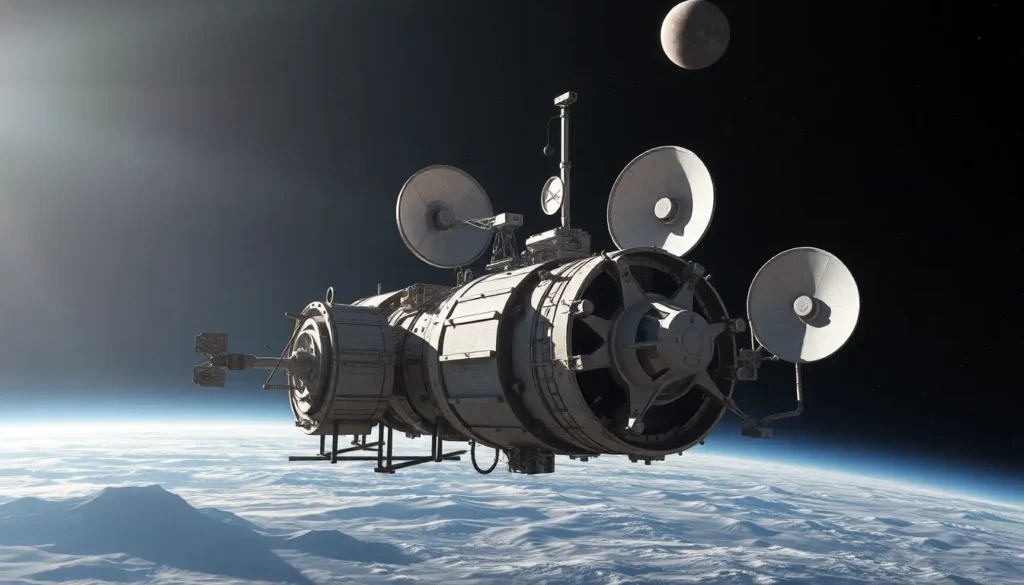

Spacecraft communication systems rely on essential components to maintain effective links. These components ensure data exchange remains seamless between spacecraft and mission control.
Transmitters and Receivers
Transmitters convert data into radio signals for space travel. They play a critical role in sending telemetry, voice, and video signals to ground stations. Receivers detect incoming signals and translate them into usable data formats. These devices must possess high sensitivity to capture weak signals from vast distances. Each spacecraft integrates customized transmitters and receivers designed for its specific mission profile, optimizing performance in diverse environments.
Antennas
Antennas facilitate the transmission and reception of signals in space. Different designs, such as parabolic and phased array antennas, serve distinct functions. Parabolic antennas focus energy for long-range communication, while phased array antennas adjust directionality electronically. Antenna placement on a spacecraft influences its ability to maintain line-of-sight with ground stations or satellites. Proper design and orientation enhance communication efficiency and reliability, minimizing the impact of potential obstacles.
Communication Protocols
Communication protocols define the rules for data exchange between various systems. These protocols ensure consistent message formatting and timing across platforms. Standardization enhances interoperability among space agencies, facilitating collaboration on joint missions. Advanced error-correcting codes improve data integrity during transmission, reducing the risk of misinformation. Continued development in communication protocols adapts to evolving technologies, supporting faster and more reliable exchanges throughout space exploration missions.
Types of Spacecraft Communication
Spacecraft communication encompasses various methods, each tailored for specific operational environments. Understanding these types enhances comprehension of the intricate networks that connect space missions.
Deep Space Communication
Deep space communication relies on powerful radio signals to connect distant spacecraft with Earth. NASA’s Deep Space Network (DSN) provides critical linkages for missions to Mars and beyond, covering vast distances with minimal delay. Signal time can reach minutes, making real-time conversations impossible. Ground stations utilize large parabolic antennas to ensure strong connections. Data transfer rates typically range from 600 bits per second to 100 kilobits per second, depending on the distance and technology used.
Near-Earth Communication
Near-Earth communication facilitates interactions with spacecraft orbiting Earth. This form of communication benefits from shorter distances, allowing for quicker data exchange. Satellite constellations like Iridium and Globalstar rely on this method to support telecommunication needs. Transmission rates can reach several megabits per second, sufficient for video feeds and telemetry. Ground stations use smaller antennas yet maintain robust connections due to the proximity of these satellites.
Inter-Satellite Communication
Inter-satellite communication establishes links between multiple satellites in a constellation. This method improves data routing and reduces latency in information transfer. Technologies like laser communication, or optical links, become increasingly attractive due to their high data rates, potentially exceeding gigabits per second. By utilizing local connections, satellites enhance overall network performance. Efficient relay systems enable continuous communication, even when individual satellites move out of range from ground stations.
Challenges in Spacecraft Communication
Spacecraft communication encounters several complex challenges that impact mission success.
Signal Delay and Loss
Signal delay and loss present significant challenges, especially for deep-space missions. NASA’s Deep Space Network records delays of several minutes for signals sent to Mars. Decisions often rely on information from Earth that takes time to transmit, complicating real-time responses. Delays can disrupt critical operations, requiring astronauts to anticipate communication gaps. Transmissions face loss due to the vast distances involved, amplifying the difficulty of maintaining constant contact. Engineers employ various techniques to mitigate these effects, ensuring data transmission remains as reliable as possible.
Environmental Interference
Environmental interference plays a crucial role in spacecraft communication challenges. Factors like cosmic radiation, solar flares, and space debris can disrupt signals. These phenomena increase noise levels, leading to potential data corruption. Additionally, varying temperatures and atmospheric conditions further complicate communication efforts, especially during planetary entry or exit. Designers of communication systems must account for these elements to enhance system resilience. As a result, technologies evolve continuously to address environmental interference, ensuring consistent signal quality.
Data Bandwidth Limitations
Data bandwidth limitations impose constraints on spacecraft communication capabilities. Each mission requires specific bandwidth allocations, affecting the volume of data transmitted. Higher data rates are essential for video feeds and scientific telemetry, but available bandwidth usually varies. Congestion occurs when multiple spacecraft transmit simultaneously, causing delays or data loss. Innovations in compression techniques aim to optimize available bandwidth and improve transmission efficiency. Scalable communication systems can accommodate higher bandwidth demands as technology advances, ensuring better performance in future missions.
Future Trends in Spacecraft Communication
Emerging trends in spacecraft communication focus on enhancing data exchange and improving mission efficiency. Innovations in this field are rapidly advancing.
Advances in Technology
Quantum communication techniques are gaining attention for their potential in secure data transmission. Multiple agencies are investing in laser communication systems, which enable faster data transfer rates compared to traditional radio waves. These systems utilize light to send information, significantly increasing bandwidth and reducing latency. Software-defined radios offer flexibility by adapting to various protocols and frequencies, allowing seamless integration across different missions. The use of artificial intelligence in communication systems enhances error correction and optimizes data routing, leading to improved reliability in signal transmission.
Potential Innovations
Satellite constellations are set to transform communication capabilities by offering global coverage and low-latency connections. These networks utilize a large number of small satellites working together to improve data routing, making them essential for real-time communication. Enhanced materials for antennas promise higher efficiency and durability, critical for long-term missions in harsh environments. Integration of machine learning algorithms could streamline communication protocols, ensuring faster data processing and reducing congestion. The development of autonomous communication systems will enable spacecraft to make decisions about data transfer without human intervention, further enhancing mission success and safety.
Spacecraft communication stands as a cornerstone of modern space exploration. Its ability to connect astronauts with mission control is crucial for both safety and mission success. As technology advances communication methods continue to evolve, paving the way for faster and more reliable data exchange.
Innovations like laser communication and quantum techniques promise to enhance capabilities, allowing for unprecedented data transfer rates and improved security. The future of spacecraft communication is bright, with emerging trends poised to address current challenges and improve overall mission efficiency.
As space agencies collaborate and invest in these technologies, the potential for exploration beyond Earth will expand, unlocking new frontiers in our understanding of the universe.