
Ever wondered how far we can really go in space with the tech we have today? Spoiler alert: it’s not as far as you might think, but it’s further than just our backyard. While we’re still not packing our bags for interstellar vacations yet, buckle up as we explore the cosmic limits of our current space-faring capabilities, with a sprinkle of humor and an ounce of curiosity.
Understanding the Limits of Current Space Travel Technologies
When we talk about the limits of current space travel technologies, we should probably start with a grounded perspective (pun intended). Today, our strongest tool for traveling beyond Mother Earth is NASA’s Space Launch System (SLS), which boasts some pretty impressive stats but still has its limitations.
To put it into perspective, the Voyager 1 spacecraft, launched in 1977, is one of humanity’s farthest-reaching probes and is currently over 14 billion miles away. But, it took us over four decades just to reach the edge of our solar system. Even so, that’s a remarkable achievement: we’re essentially sending a little tin can on a marathon through the cosmos.
But let’s not get too starry-eyed. We’re currently limited in our ability to travel beyond our solar system, mainly due to a little thing we like to call speed. The fastest spacecraft ever built, the Parker Solar Probe, can reach speeds of up to 430,000 miles per hour, yet it would still take over 6,000 years to reach the nearest star, Proxima Centauri, which is about 4.24 light-years away. What’s the rush either way, right?
Key Spacecraft and Their Range
Let’s take a moment to highlight some key spacecraft and their travel ranges. We’re already familiar with the likes of the Apollo program, which took humans to the Moon. A mere 238,855 miles away, the Moon isn’t exactly out of reach. Nevertheless, it paved the way for our understanding and thirst for more.
Then we have the Mars rovers. Curiosity and Perseverance have traveled just shy of 200 million miles in total from Earth to Mars and back with some spectacular science in tow. Our ongoing explorations here on the red planet keep the door open for future manned missions, but we still have work to do before we can comfortably call Mars our next vacation spot.
Now, since we’re dreamers at heart, let’s not forget about the long-term missions like the planned Artemis program, intended to establish a sustainable presence on the Moon, laying the groundwork for future manned missions to Mars. The nearest destination beyond that is possibly Europa or even Titan, where we could search for life forms and other wonders.
The Role of Propulsion Systems in Space Travel
Let’s chat about propulsion systems because, without them, we’d still be looking up at the stars wishing we could go. Traditional rocket engines like those powering the Space Shuttle use chemical propulsion, which works superbly for reaching low Earth orbit but faces a significant hurdle when it comes to interstellar travel.
Imagine driving your car at 60 miles per hour and then suddenly hitting a wall, you’re going to get stuck. That’s how chemical propulsion feels when it comes to the vastness of space. We need to step up our game with concepts like ion propulsion or nuclear thermal propulsion, which offer a longer operational life and efficiency.
We’re also exploring concepts like solar sails, which rely on the momentum of photons to propel a spacecraft. Strange but true. While the technology is still in its infancy, it holds the promise of dramatically expanding our reach among the stars.
Interstellar Travel: Possibilities and Challenges
Now, let’s take a moment and daydream about interstellar travel, pop a few popcorn kernels while we’re at it. The science here is as tantalizing as it is mind-boggling. To get to our nearest star systems, we’d need to consider exotic technologies like warp drives or generation ships.
Warp drives, also known as Alcubierre drives, could theoretically bend space-time. You’d think we just stepped out of a sci-fi movie. Yet, there are challenges, such as the requirement of negative mass, something we haven’t exactly figured out how to harness just yet.
Generation ships could allow us to travel over dozens of generations, but who wants to live in a floating tin can for a hundred years? Not the most appealing option, is it? Then there are the cosmic risks, cosmic rays, unintended gravitational engagements, and even running out of snacks could bring our dreams crashing down. Literally.
Future Advances in Space Travel Technology
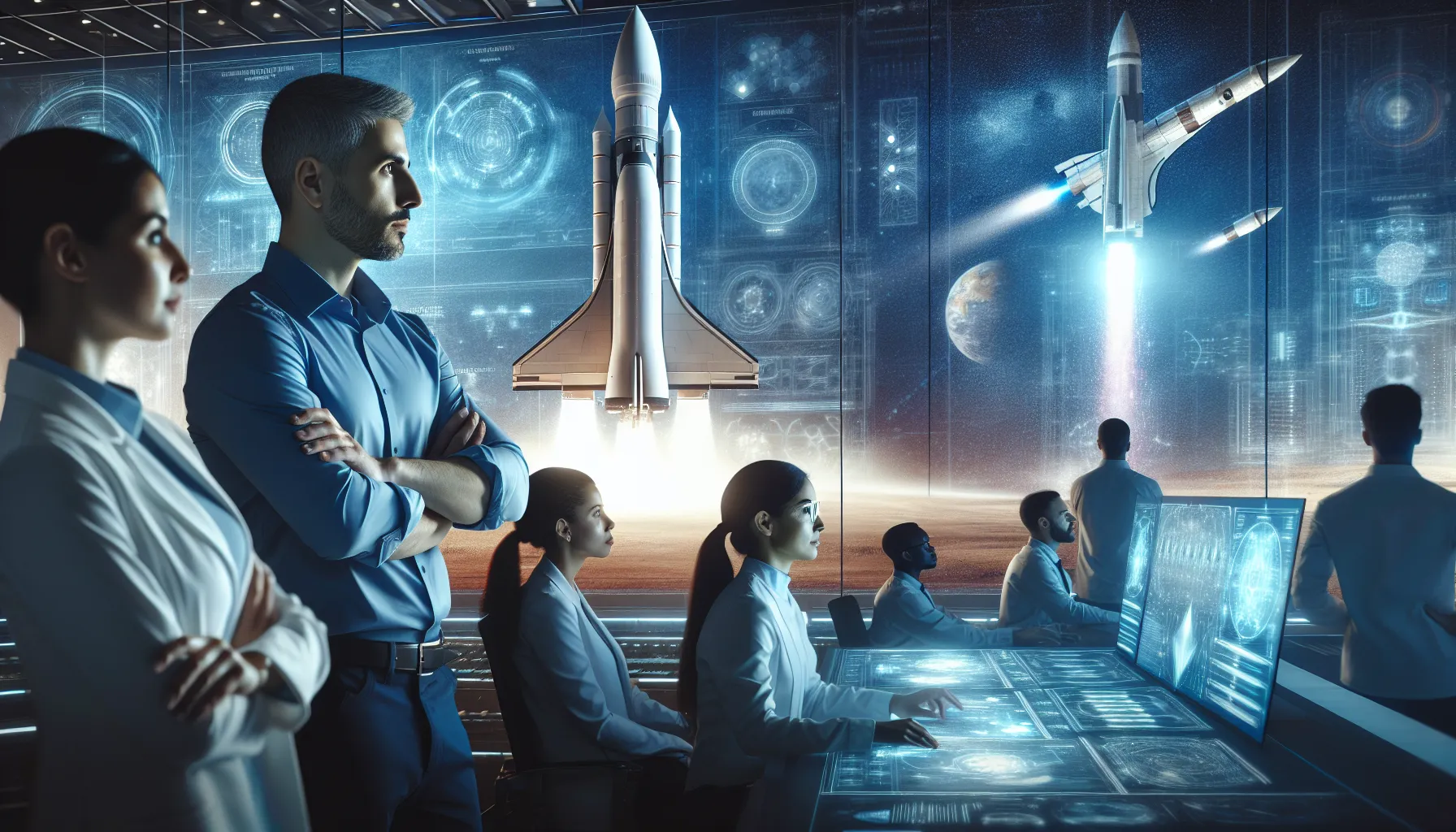
What’s next on the horizon? Technologically speaking, the future looks bright, but it does require patience. Companies like SpaceX are already looking into evolving rocket technologies that may make interplanetary travel cheaper and more efficient.
We’re also hearing whispers (or maybe they’re more of a roar) about breakthroughs in propulsion methods. Theoretical physicists are still considering antimatter propulsion. Yes, antimatter. It could, in theory, revolutionize space travel as we know it by providing an incredible energy density and making our wildest dreams of cruising to Mars a reality far sooner than we expect.
But, investment and global collaboration will be paramount in making these advancements a reality. Space exploration has now surpassed national boundaries, becoming a human try embracing our shared curiosity.


