
Welcome to the wild, wondrous world of satellites. If you thought launching a satellite was as straightforward as sending a text message, think again. From the spaghetti of wires behind your TV to the complex networks that keep our phones connected, satellite technology plays a crucial role in our daily lives. Join us as we orbit through the universe of satellite companies, unearthing their evolution, major players, and what their future looks like, all while having a chuckle or two.
The Evolution of Satellite Technology

The story of satellite technology is a tale as old as time, or at least as old as the Space Age. We started off with humdrum experiments, like the Soviet Union’s Sputnik in 1957, which kicked off an interstellar arms race and quite a few enthusiastic science fairs. Fast forward through the decades, and we’ve progressed from simple communication satellites to complex geostationary networks, ensuring that even the most remote areas can binge-watch all their favorite shows.
Today, we’re not just talking about bigger satellites, but smarter ones. Innovations like miniaturization and smart technology have led to CubeSats and nanosatellites, packing a punch while boasting a fraction of the size. These advancements have transformed our views on technology, making satellite launches more economical and accessible, rather like switching from a lavish dinner out to a cozy meal at home while simultaneously making us savvier about the universe we live in.
Major Players in the Satellite Industry

When we talk about major players in the satellite industry, a few names come to mind. Think about SpaceX, the underdog-turned-giant that revolutionized launching costs with the Falcon 9 rocket. Their Starlink project aims to blanket the Earth in internet connectivity, making us all feel like we’re living in a sci-fi movie.
Then there’s the traditional stalwarts like Boeing and Lockheed Martin, companies that have been designing satellites for decades and still lead the charge with their groundbreaking technology. And let’s not forget about OneWeb and Amazon’s Project Kuiper, which are set to challenge the old-school giants and bring even more competition to the field.
These players, along with countless others, are shaping the industry in ways we could barely imagine just a few years ago.
Types of Satellites and Their Functions
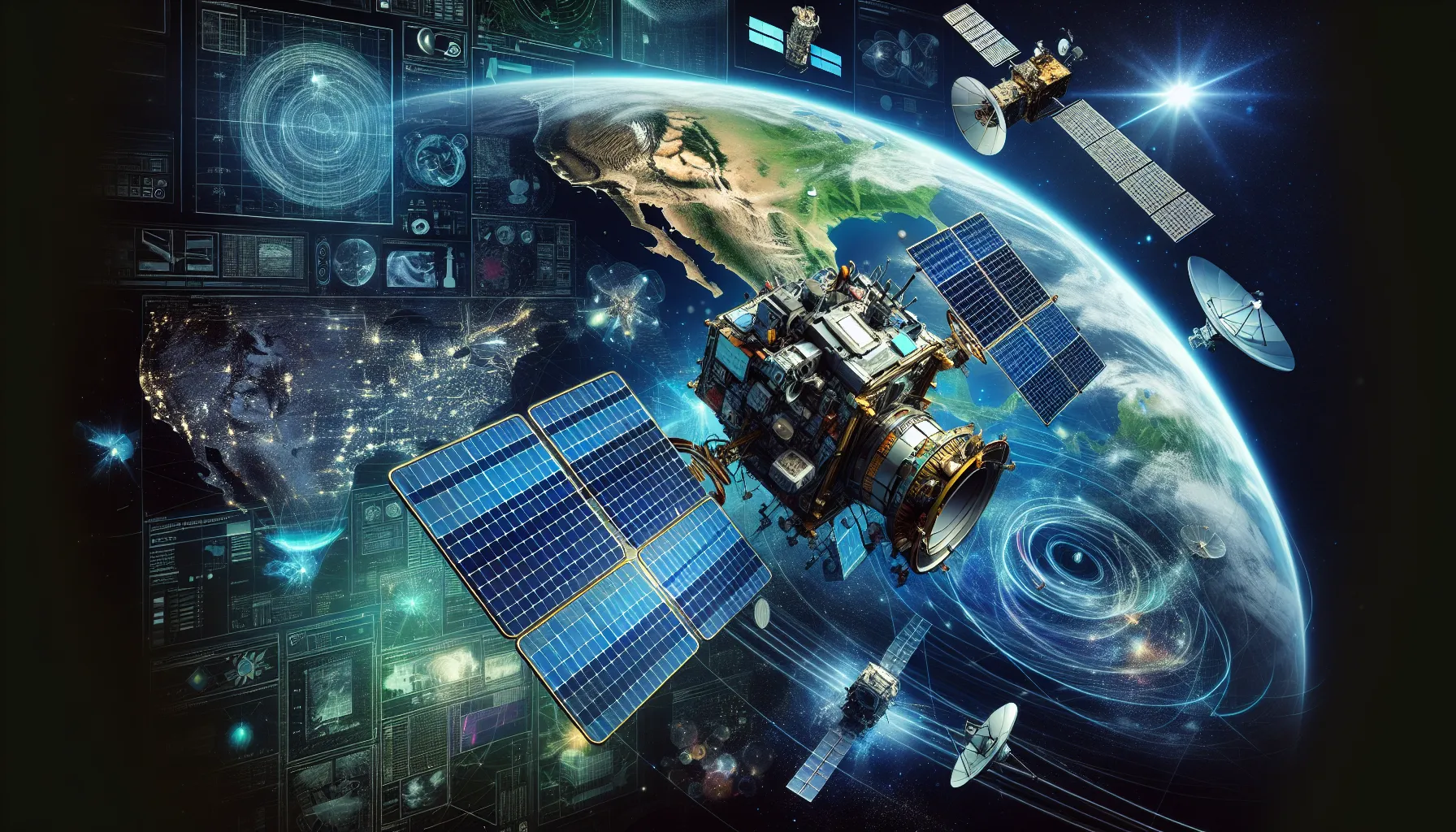
So, what kinds of satellites are out there? We can categorize them into several types, each with its own unique functions. Communication satellites help us chat and watch videos from anywhere, while weather satellites keep us ahead of the storm (or at least give us a heads-up to grab an umbrella).
Of course, we can’t leave out reconnaissance satellites, which spy on everything from crops to military bases. Then, we have navigation satellites, like the famed GPS satellites that help us find our way, even if our sense of direction disagrees. Each type plays a vital role in making our lives easier and more connected. It’s incredible to think of how a little satellite can hold the key to so many global functions.
The Role of Satellite Companies in Communication

Let’s dive deeper into the communication aspect. Satellite companies are crucial in connecting people globally. With just a flick of a switch, we can video chat with someone on the other side of the globe. This technology facilitates not just personal connections, but also business operations and emergency services.
Public services rely on satellites for effective disaster management, and individuals in remote areas can participate in the digital age. Imagine living in a place where traditional internet is a distant dream, yet you can still access critical information through satellite connections. It’s this very aspect that underpins the satellite industry’s importance in the global communication framework.
Challenges Facing the Satellite Industry

Even though the glowing successes, the satellite industry faces several prickly challenges. Launching satellites can be astronomically expensive, and technical difficulties can lead to catastrophic failures. Not to mention, space is becoming a crowded place: with all these satellites flying about, the risk of collisions is significantly increasing.
Also, with rising concerns about space debris, and not just the leftovers from our last cosmic pizza party, companies are pressured to think sustainably. Eventually, while we’re launching satellites left and right, we must also be mindful of what we leave behind.
The Future of Satellite Companies
Looking ahead, the future of satellite companies is nothing short of thrilling. Innovations like artificial intelligence and machine learning are beginning to be integrated into satellite technology, enhancing analytical capabilities and decision-making processes.
We’re also witnessing the emergence of mega-constellations that promise to offer global internet access. The competition among companies is pushing rapid advancements that will make it easier sky-gazers (and couch-surfers) everywhere to stay connected. And let’s not forget about potential partnerships in space exploration, who knows? One day, a satellite may even help us connect with extraterrestrial life. Is it far-fetched? Maybe. But we still love to dream big.


